
- Call: (725) 215-0109
- Email: support@organickratomusa.com
Rebranding launch sale: code FRESH20 for 20% off!
Free nationwide shipping over $79.00!
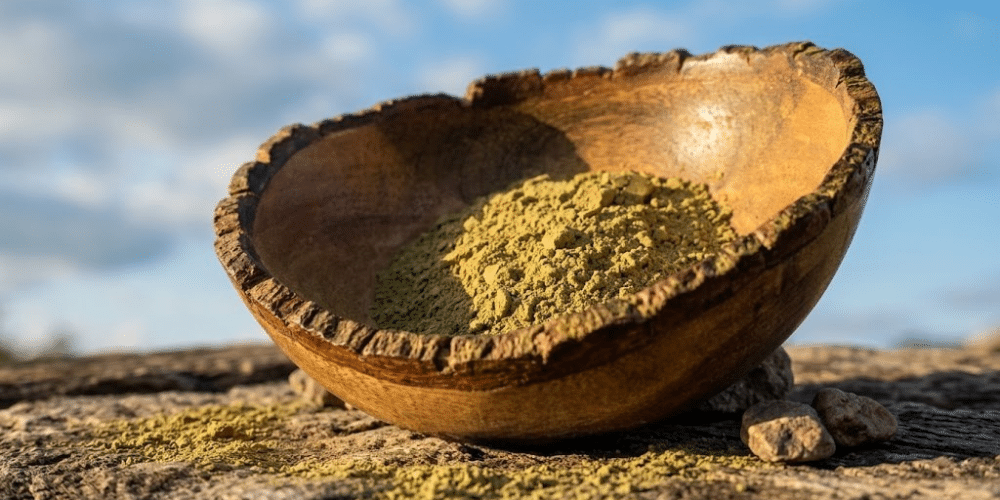
White Elephant Kratom is one of the most recognized White Kratom varieties in today’s marketplace.
Its name isn’t a marketing invention. It comes from a visible botanical trait — exceptionally large leaves harvested from mature Mitragyna speciosa trees.
If you’re researching white elephant kratom, this guide covers:
White Elephant Kratom is a White Kratom strain derived from oversized, mature Mitragyna speciosa leaves, primarily cultivated in Indonesia. It is named for its large leaf size rather than geographic origin.
The defining characteristics:
When people search “what is white elephant kratom”, they’re typically looking for what makes it distinct.
The answer is simple:
Leaf size + White Vein classification + mature harvest stage.
The term “Elephant” refers directly to leaf size.
Elephant leaves:
Other Elephant varieties exist (Red Elephant, Green Elephant), but White Elephant Kratom remains one of the most commercially recognized.
Read More: Elephant Kratom Guide
Most White Elephant Kratom available in the U.S. comes from:
Environmental factors that support oversized foliage:
Farmers typically allow these leaves to reach full maturity before harvesting.
White Elephant Kratom follows a structured agricultural process:
Only fully matured, oversized leaves are collected.
Leaves are inspected and separated for consistency.
Indoor or shaded drying preserves vein classification.
Leaves are milled into uniform powder.
Products are packed to maintain freshness and integrity.
Important: The White Kratom classification is determined before processing, based on natural vein coloration.
Here’s where White Elephant stands apart:
| Feature | White Elephant Kratom | White Maeng Da | White Borneo | White Thai |
| Naming Basis | Leaf size (oversized foliage) | Cultivation/selection term | Regional origin (Borneo) | Regional origin (Thailand) |
| Leaf Size | Significantly larger than standard | Standard | Standard | Standard |
| Harvest Stage | Fully mature leaves | Varies by farm | Varies by region | Varies by region |
| Primary Source | Indonesia | Indonesia | Indonesia (Borneo region) | Thailand / Indonesia |
| Distinguishing Factor | Physical botanical trait | Selective cultivation reputation | Geographic identity | Historic regional association |
White Elephant Kratom consistently ranks among widely recognized White strains.
Reasons for continued demand:
As the Kratom market matures, strain transparency matters more than generic labeling.
White Elephant offers:
In short: White Elephant Kratom = large leaves + White Vein classification + established Southeast Asian origin.
White Elephant Kratom is a white strain sourced from unusually large, mature leaves of the Mitragyna speciosa tree, primarily cultivated in Indonesia.
They are allowed to remain on the tree longer, reaching full maturity before harvesting, which contributes to their size.
Yes. It refers to naturally grown oversized leaves rather than an artificial blend or modified strain.
White Elephant is named after leaf size, while White Maeng Da is typically associated with regional cultivation and selective breeding terminology.
Most commercial supply originates from Indonesian regions known for large-leaf Kratom farming.
Yes. Due to strong demand and consistent cultivation, it is commonly offered by U.S. online vendors.
No. White Elephant Kratom is defined by its oversized, mature leaves — not by a standardized strength scale. Differences between White strains are typically based on leaf characteristics and origin.
No. White Elephant Kratom is not a blend. It comes from naturally grown Mitragyna speciosa leaves, and the “Elephant” name refers to the large leaf size, not a mixture of strains.