
- Call: (725) 215-0109
- Email: support@organickratomusa.com
Rebranding launch sale: code FRESH20 for 20% off!
Free nationwide shipping over $79.00!
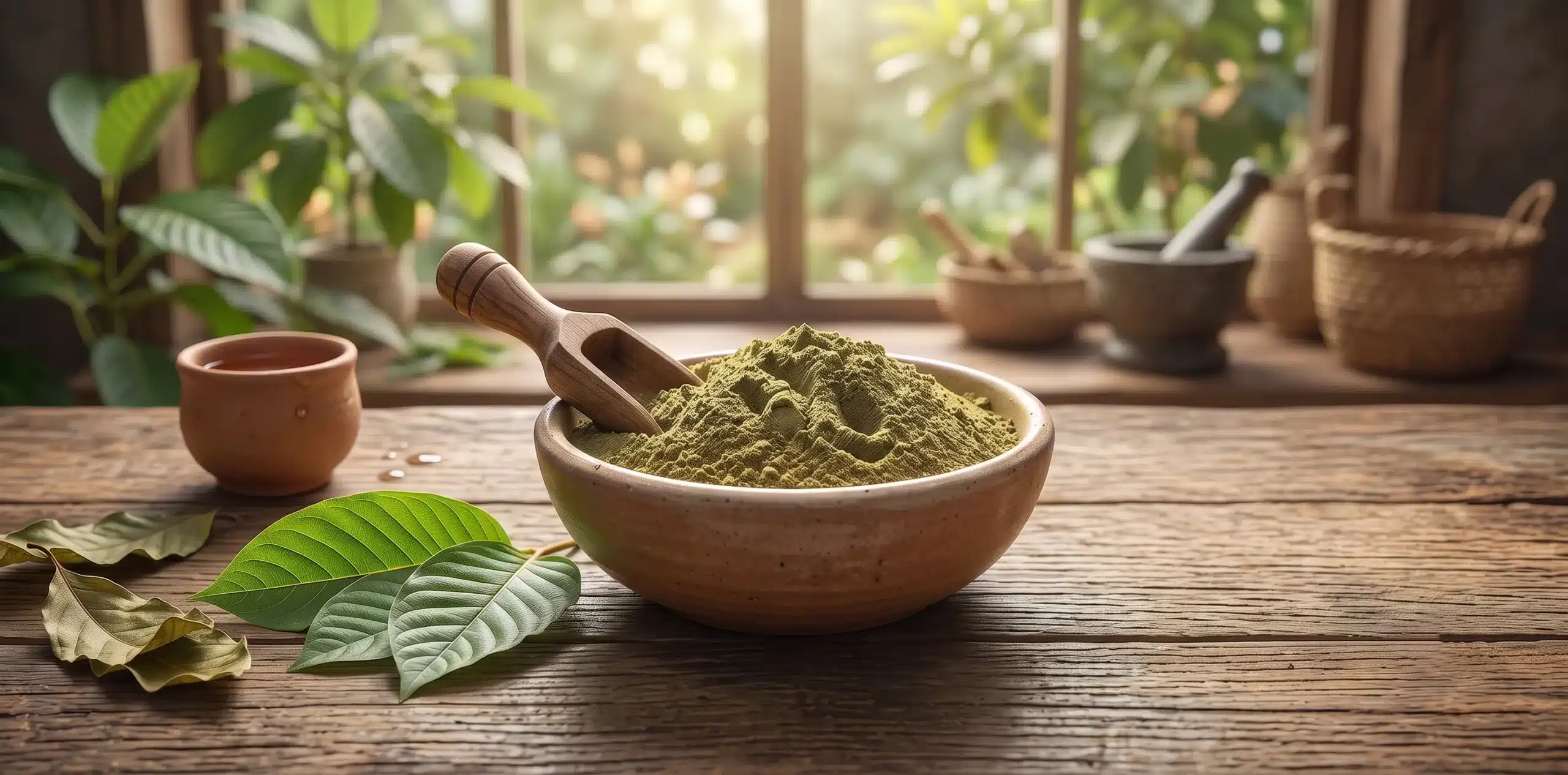
Red Bentuangie Kratom stands apart from most Kratom strains available in the market today — not because of where it’s grown, but because of how it’s made. While many strains are classified primarily by region, Red Bentuangie Kratom is recognized first and foremost for its distinctive fermentation process. This extended, traditional method of post-harvest handling is what defines the strain and sets it apart from conventionally processed Red strain Kratom.
In this guide, you’ll learn what “Bentuangie” actually refers to, how its fermentation unfolds from harvest to powder, and what truly sets it apart from every other Red strain on the shelf.
Red Bentuangie Kratom is a distinct variety of Kratom known primarily for its extended fermentation process rather than a single fixed growing region. It’s grouped under the broader Red strain Kratom category based on vein color classification, but its production method is what truly sets it apart.
Although Red Bentuangie Kratom is best known for its fermentation process, its roots still trace back to Indonesia, one of the world’s leading Kratom-growing regions.
It is produced from Mitragyna speciosa trees cultivated in the tropical forests of West Kalimantan on the island of Borneo, where warm temperatures, consistent rainfall, and fertile soil support year-round growth.
| Term | Meaning |
| Red | Refers to the color of the leaf veins at harvest and the deep, chocolate-brown hue created by the curing process. |
| Bentuangie | Represents the specific, moisture-rich fermentation technique rather than a fixed geographic region. |
⭐ Read more about — Bentuangie Kratom
Like other Kratom varieties, Red Bentuangie Kratom naturally contains a range of alkaloid compounds.
Together, these alkaloids form the plant’s natural alkaloid profile, although their concentrations are not fixed and can differ from one harvest to another.
Several factors can shape the final alkaloid makeup of Bentuangie Red Kratom:
👉 Leaf maturity at harvest — older leaves generally carry a different alkaloid balance than younger ones.
👉 Length of fermentation — longer fermentation windows tend to produce more pronounced shifts in the overall alkaloid makeup.
👉 Growing conditions — soil quality and regional climate can influence the final alkaloid composition.
Now that you know what the name stands for, here’s how the strain is harvested and processed:
The process begins with mature Mitragyna speciosa leaves harvested from trees grown in West Kalimantan, Indonesia. Farmers carefully select fully developed leaves before sorting them to ensure only suitable material moves forward for processing.
After harvesting, the leaves undergo a controlled drying stage to reduce excess surface moisture. Rather than drying them completely, this step prepares the leaves for the fermentation process while helping maintain consistent processing conditions.
The partially dried leaves are then placed under controlled conditions, where natural fermentation takes place over an extended period. This post-harvest technique is the defining stage of Red Bentuangie Kratom and distinguishes it from conventionally processed Red strains.
Once fermentation is complete, the leaves are dried until they reach a stable moisture level before being finely milled into Red Bentuangie Kratom Powder. The finished powder may also be encapsulated, depending on the final product format.
Below are the two forms available for Red Bentuangie Kratom:
| Aspect | Red Bentuangie Kratom Powder | Red Bentuangie Kratom Capsules |
| Form | Finely milled Red Bentuangie Kratom leaf powder | Finely milled Red Bentuangie Kratom Powder enclosed in capsules |
| Processing Stage | Fermented and dried leaves are milled into a fine powder | Powder is enclosed in capsule shells after milling |
| Packaging | Commonly packed in resealable pouches or bulk bags | Usually available in bottles, pouches, or capsule containers |
⭐ Learn more about Kratom forms:
A few clear, process-driven factors set Red Bentuangie Kratom apart from other varieties in the Red strain family.
⚡Fermentation as the defining characteristic — Unlike most Red strains, Red Bentuangie Kratom is primarily recognized for its traditional fermentation process rather than its growing region alone.
⚡A process-focused identity — While many Kratom varieties are named after the region where they are cultivated, Bentuangie is identified by its post-harvest processing method.
⚡A naturally darker appearance — The fermentation and curing process results in a noticeably darker powder than many conventionally processed Red strains.
⚡Less common in the commercial market — Because of its specialized production process, Red Bentuangie Kratom is generally less widely available than popular varieties such as Red Bali or Red Maeng Da.
Here’s how Red Bentuangie Kratom compares to a few other well-known Red strains:
| Strain | Geographic Origin | Cultivation Environment | Alkaloid Profile | Market Availability |
| Red Bentuangie | West Kalimantan, Indonesia | Tropical rainforest with high rainfall and humidity | High Mitragynine content, with fermentation shifting the secondary alkaloid balance | Comparatively limited |
| Red Vietnam | Vietnam (Mekong region) | Tropical riverside forests with fertile alluvial soil | High Mitragynine with other trace alkaloids like 7-Hydroxymitragynine | Limited |
| Red Bali | Kalimantan, Indonesia | Lowland tropical forests with humid conditions | Balanced distribution of Kratom alkaloids like Mitragynine and 7-Hydroxymitragynine | Widely available |
| Red Dragon | No fixed origin (commonly an Indonesian blend) | Varies by cultivation source | High 7-hydroxymitragynine concentration | Varies by supplier |
| Red Thai | Thailand-origin genetics, largely cultivated in Indonesia | Tropical lowlands with a monsoon climate | High mitragynine and mitraphylline | Widely available |
The availability of Red Bentuangie Kratom depends on local Kratom regulations. Kratom laws can vary by state, county, and city, which means this strain may not be available in every location. Before placing an order, it’s always important to check the regulations that apply in your area and confirm whether shipping is available or not.
OKUSA carries Red Bentuangie Kratom in both powder and capsule formats, making it easy to choose the product form that matches your preference.
✔️ Free Shipping Over $79
✔️ Lab-Tested Products
✔️ Easy Order Tracking
✔️ Wide Kratom Selection
✔️ Responsive Customer Support
Red Bentuangie Kratom is defined primarily by its extended fermentation process, which takes place after harvest and before drying. This additional step is what separates it from other Red strains, which are typically dried shortly after harvest without fermentation.
Both are Bentuangie varieties produced through fermentation, but they belong to different color classifications based on leaf maturity and post-harvest processing. As a result, they differ in their natural alkaloid composition and overall production characteristics.
The primary difference lies in their production methods. Red Bentuangie Kratom is defined by its traditional fermentation process, whereas Red Bali Kratom follows a conventional drying process without the extended fermentation stage.
Yes, Red Bentuangie Kratom is available at OKUSA. You can shop both powder and capsule products in different sizes.
Yes, Red Bentuangie Kratom belongs to the Red strain Kratom category. While it shares the Red classification with other Red strains, it is distinguished by its traditional fermentation process, which plays a key role in defining the strain.
Not exactly. While fermentation is central to the Bentuangie classification, the term specifically refers to Kratom processed using the traditional fermentation method associated with Bentuangie production, rather than any Kratom that has undergone some general form of post-harvest fermentation.
Disclaimer: This content is for general informational purposes only and is not intended as professional or legal advice. Kratom laws vary by location, so always review current local regulations before placing an order. Product availability may differ by region, stock status, and supplier policies.