
- Call: (725) 215-0109
- Email: support@organickratomusa.com
Rebranding launch sale: code FRESH20 for 20% off!
Free nationwide shipping over $79.00!
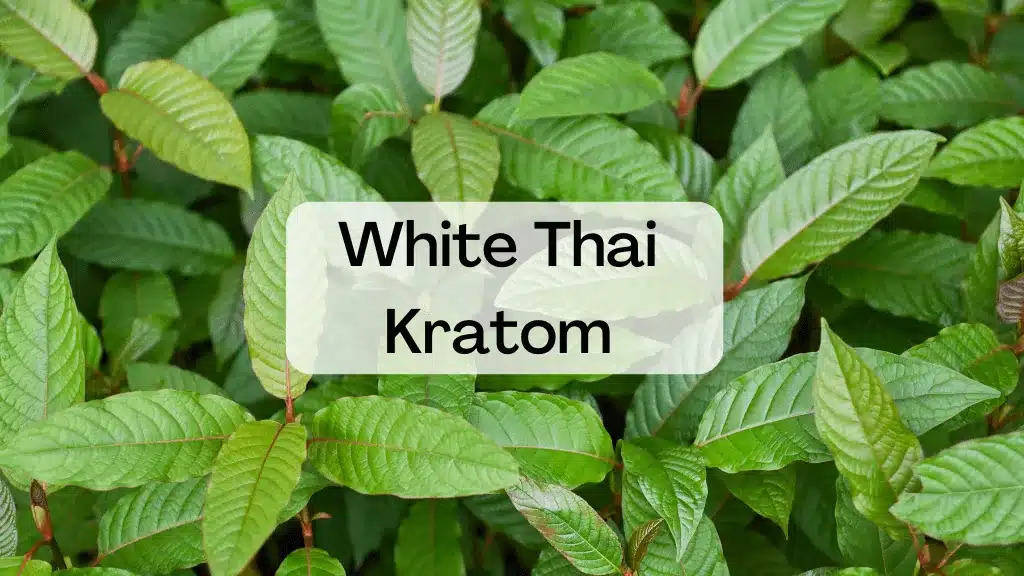
White Thai is one of the most searched strains in the White Kratom category — and one of the most misrepresented. The name carries real weight in the Kratom market, but what’s actually behind it rarely gets a straight answer. Where it comes from, what its alkaloid profile looks like, how it compares to other Thai strains, which format is worth your money, and what separates a quality product from a low-quality one—that’s what this covers.
At its core, White Thai Kratom is a White Kratom strain named after Thailand, a country with one of the deepest histories of Mitragyna speciosa cultivation in Southeast Asia. The “white” part refers to the color of the central vein running through the leaf at the time of harvest. Leaves picked early in their growth cycle display a pale, almost white color, and that’s exactly what distinguishes White strains from their Green and Red Kratom counterparts.
What makes White Thai stand out is its alkaloid profile. It tends to have a notably high concentration of Mitragynine, the primary active alkaloid in Kratom, giving it a distinct character compared to other white strains.
The majority of White Thai Kratom sold in the United States does not come from Thailand.
Kratom, formally known as Mitragyna speciosa, is a tropical tree native to the warm, humid forests of Southeast Asia: Thailand, Indonesia, Malaysia, and nearby regions. Thailand has one of the richest Kratom cultivation histories of any country, but sourcing directly from Thailand has historically been complicated by shifting legal restrictions on Kratom export.
As a result, most commercial Kratom, including products labeled “White Thai”, is sourced from Indonesian growing regions, particularly Kalimantan (Indonesian Borneo).
Why does it still carry the Thai name? Because the trees in these Indonesian regions share a close botanical lineage with Thai-origin plants and produce leaves with a comparable alkaloid profile. Over time, “White Thai” became an industry shorthand for a specific alkaloid character and leaf presentation, not a strict declaration of geographic origin.
Is that problematic? Only if the vendor isn’t transparent about it. A good vendor tells you exactly where their Kratom was grown. If they can’t, or won’t, that’s worth paying attention to.
White Thai is a great example of how Kratom strain naming works across the board.
Kratom strain names combine two things: a vein color and a geographic reference. With “White Thai,” “Red Bali,” “Green Borneo“, the formula is consistent. What’s less consistent is how accurately those names reflect the actual product inside the bag.
The geographic label is a reference point, not always a shipping address. Much of what is sold under regional names, like Bali, Borneo, and Thai, is sourced from Kalimantan, the world’s primary commercial Kratom farming hub. The names stuck because they describe the alkaloid character and lineage, not necessarily the farm’s GPS coordinates.
What does this mean practically? It means the name on the label tells you the strain category. The COA (Certificate of Analysis) tells you what’s actually in it. Those two things together give you a complete picture.
Now that we are clear on what the “White Thai” label stands for, let’s look up how this strain is made.
Quality starts in the field. Here’s what the production chain looks like for a properly sourced White Thai product:
The White Kratom category has plenty of options. Here’s how White Thai holds up against the most common alternatives:
| Strain | Origin Region | Alkaloid Emphasis |
| White Thai | Thailand / Indonesia (Kalimantan) | High mitragynine; notable 7-OH |
White Borneo | Borneo, Indonesia | Balanced mitragynine profile |
White Maeng Da | Indonesia | High alkaloid concentration |
White Bali | Kalimantan / Bali region | Smooth, moderate alkaloid density |
White Thai sits at the higher end of the Mitragynine spectrum among White Kratom varieties. If you’re comparing it to White Bali, for example, you’re generally looking at a sharper, more distinctly profiled strain.
White Maeng Da is another high-concentration option, so the alkaloid character can vary more from batch to batch depending on its formulation. White Thai, by contrast, has a more defined regional identity.
Read More: Top 6 White Strains For White Kratom Lovers
The “Thai” family comes in all three primary vein colors, and the differences between them aren’t due to branding, but it’s biology.
Each vein color represents a different stage of leaf maturity at harvest. The alkaloid composition shifts depending on when the leaf is picked.
| Feature | White Thai | Green Thai | Red Thai |
| Harvest Timing | Early maturity | Mid maturity | Fully mature |
| Leaf Vein Color | Pale white | Green | Deep red |
| Mitragynine Level | Elevated | Moderate | Moderate |
| 7-OH Level | Low to moderate | Moderate | Higher relative concentration |
| Alkaloid Character | Mild to moderate profile | Balanced, middle-ground | Stronger profile |
The vein is still pale, and the leaf hasn’t yet built up the deeper alkaloid concentrations that come with age. The result is a lighter, milder yet defined alkaloid profile.
Leaves are more developed than the white-vein color, but haven’t reached full maturity. The alkaloid ratio shifts—Mitragynine and 7-OH are present in a balanced proportion.
At this stage, the alkaloid profile carries the weight of full leaf development — a higher relative concentration of 7-OH compared to younger leaves. Red Thai sits at the opposite end of the spectrum from White Thai.
White Thai’s profile is defined by a handful of key alkaloids:
The only way to verify what’s actually in a specific batch is a Certificate of Analysis from an accredited third-party laboratory. It will cover alkaloid concentrations, heavy metals, and microbiological purity.
White Thai Kratom Powder is the most flexible and widely available form, and is just finely milled leaf material. It’s also the most cost-effective option for larger quantities.
White Thai Capsules are the same powder, pre-filled into vegetarian shells. They do not require any measuring or prep — just simple and portable.
Extract is concentrated White Thai, processed to elevate alkaloid density, and labeled by ratio or mitragynine percentage. It is not a different strain, just a more potent form of the same profile. Always check the concentration label before purchasing.
| Characteristics | Powder | Capsules | Extract |
| Flexibility | Highest | Low | Low |
| Convenience | Moderate | Highest | Moderate |
| Precision | Requires scale | Pre-measured | Requires an understanding of ratios |
| Alkaloid Concentration | Standard | Standard | Elevated |
The Kratom market in the United States is not uniformly regulated. Before buying, check for:
Also Read: Best Tips To Buy Kratom Online
Kratom is federally legal in the United States, but state and local laws vary.
Several states have enacted their own restrictions or outright bans:
Beyond state-level restrictions, some counties and cities have their own local regulations that apply even within otherwise legal states.
Before purchasing White Thai Kratom, or any Kratom product, confirm the legal status in your specific location. Regulations in this space have shifted over the years and continue to evolve. Checking your state and local laws isn’t just good practice; it’s the responsible first step.
It comes down to harvest timing and the resulting alkaloid profile. White Thai is picked early, when the leaf vein is still pale, resulting in a higher Mitragynine concentration than in Green or Red strains.
Within the White Kratom category, its Thai or Kalimantan-Indonesian origin gives it a distinct regional character that sets it apart from strains like White Borneo or White Bali.
Both sit on the higher end of the Mitragynine concentration range within White Kratom. The key difference is consistency: White Maeng Da is typically a “pimp-grade” strain, meaning its alkaloid profile can vary more from batch to batch.
White Thai has a more defined regional identity and a more predictable alkaloid profile when sourced from a consistent growing region.
Yes. White Kratom strains are typically dried indoors with limited direct sun exposure. Prolonged drying, or drying outdoors in direct sunlight, can degrade certain alkaloids and shift the overall profile toward Green or Red Kratom characteristics. Controlled drying is one of the more overlooked quality variables in Kratom production.
Yes. Every batch of OKUSA White Thai Kratom is tested by an independent, accredited laboratory before it’s released. Certificates of Analysis are available upon request and cover alkaloid quantification, heavy metals screening, and microbiological contamination testing.
Yes. OKUSA carries White Thai Kratom in powder and capsule formats. Both are produced from the same source and contain GMP-compliant leaf material. Only the format changes; the quality standard doesn’t.
Keep it in a sealed, airtight container away from direct sunlight, heat, and moisture. Proper storage conditions preserve alkaloid integrity over time and extend your product’s useful shelf life.
There’s no shortage of vendors selling Kratom online. What makes OKUSA different isn’t a marketing angle, but it’s a set of operational commitments we hold ourselves to, whether or not anyone is checking.
When you buy White Thai Kratom from OKUSA, you’re buying a verified product from a vendor that treats accountability as a baseline.
Disclaimer:
This article is intended for informational and educational purposes only and should not be considered medical, legal, or professional advice. Kratom products are not approved by the FDA, and regulations may vary by state or local jurisdiction. Always review local laws and consult a qualified professional before purchasing or consuming Kratom products.