
- Call: (725) 215-0109
- Email: support@organickratomusa.com
Rebranding launch sale: code FRESH20 for 20% off!
Free nationwide shipping over $79.00!
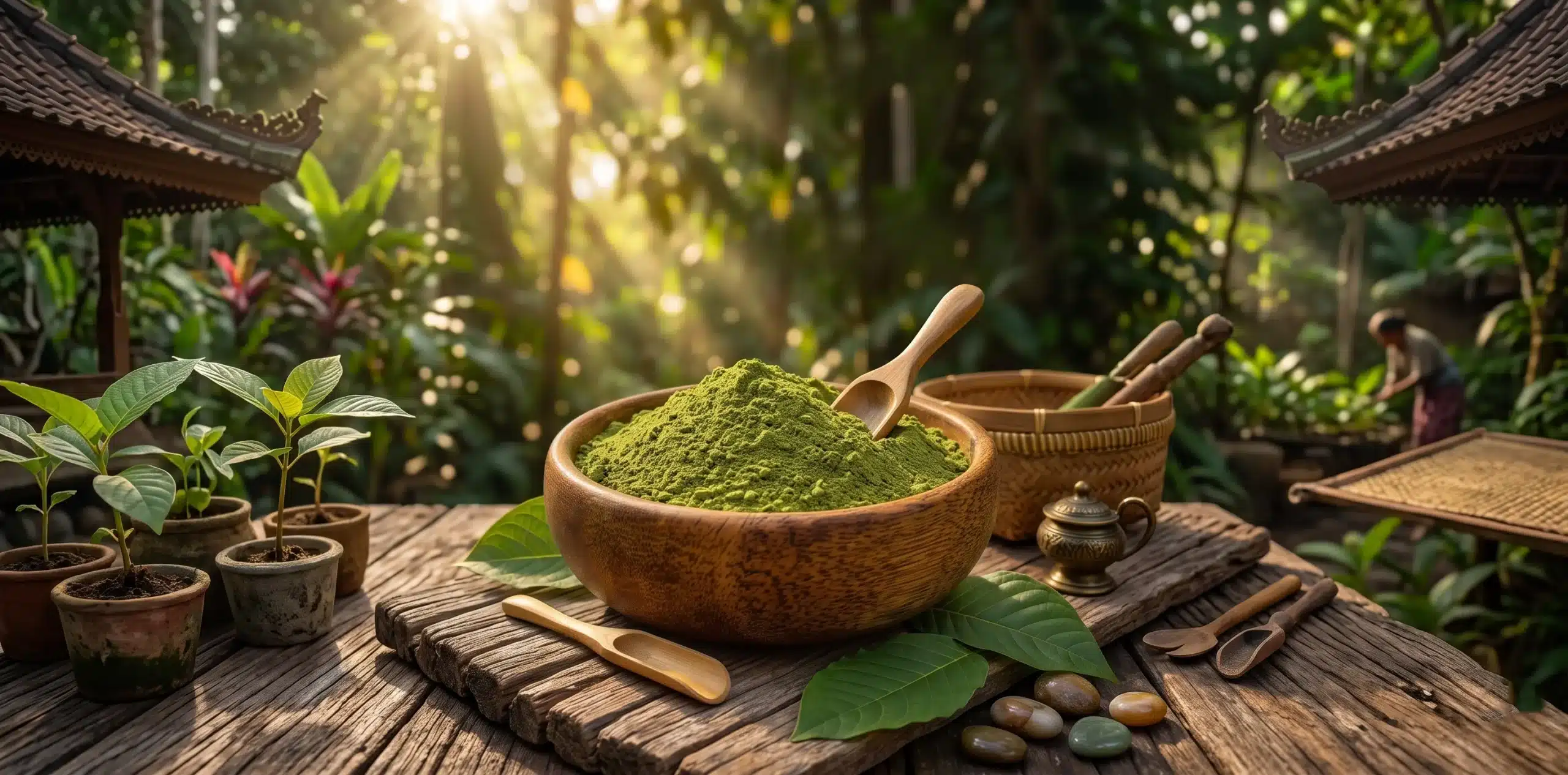
White Hulu Kratom is one of those strains that often sparks curiosity because its name is familiar, yet reliable information about it can be surprisingly limited. From its regional roots and harvesting methods to its botanical characteristics and available product forms, there is much more to understand than the name alone suggests.
While dozens of white vein strains are widely available, White Hulu remains one of the less common options. So, what actually sets it apart? This White Hulu Kratom guide explores its origin, processing methods, natural alkaloid profile, available product forms, and the key factors to consider before making a purchase.
White Hulu Kratom is a specific variety of Mitragyna speciosa plant harvested from the dense Hulu Kapuas River basin in the Kalimantan region of Indonesian Borneo. It is one of the most well-known, traditional varieties of White Kratom available in the market today.
“White” — Indicates that the leaves are typically harvested early in their life cycle when they still carry pale, almost white-colored veins running through the centre of the Mitragyna speciosa leaves.
“Hulu Kapuas” — “Hulu” is a Malay/Indonesian word meaning “upstream.” Whereas, Kapuas refers to the Kapuas River which is the longest river in Indonesia, through West Kalimantan, Borneo region. Together, “Hulu Kapuas” simply points to the inland stretch of this river basin which is the specific geographic zone where Hulu Kratom strain is grown and harvested.
| 💡 Did you know? White Hulu Kratom strain is cultivated along the Kapuas River basin, where the leaves are typically ovate to elliptic in shape, displaying a glossy, waxy upper texture that helps the plant handle intense tropical humidity. A single healthy leaf reaches lengths of 6 to 8 inches. This unique characteristic makes White Hulu Kratom distinct from other varieties. |
The remote growing environment of the Hulu Kapuas region shapes every stage of this strain’s production. Here’s a brief explanation of how White Hulu Kratom is grown and harvested:
Harvesters travel to the remote forests along the Kapuas River to find mature Mitragyna speciosa trees. They specifically pick young leaves with pale, white veins early in their growth cycle to capture the strain’s unique alkaloid balance.
The freshly picked leaves are thoroughly washed in clean water to remove river mud, dust, and debris. Once dry, workers carefully strip away the thick central veins and stems, leaving only the alkaloid-rich leaf material for processing.
Unlike red strains that dry in direct sunlight, White Hulu leaves are dried indoors in dark, climate-controlled rooms. This lack of light prevents UV rays from breaking down the delicate mitragynine alkaloids.
Before grinding, the dried leaves undergo a specialized sterilization process, often using UV light or flash pasteurization. This critical step eliminates potential contaminants like mold, yeast, or bacteria without altering the chemical structure of the leaf.
The sterile leaves are placed into high-grade industrial milling machines that grind the material into an ultra-fine, flour-like powder. This maximizes the surface area of the kratom, making it easier to package and blend smoothly.
The finished Kratom powder is immediately transferred into airtight, light-blocking bags or jars to prevent oxidation. This rapid sealing helps protect the powder from excess air, light, and moisture exposure.
White Hulu Kratom’s alkaloid composition is shaped by the unique soil chemistry of the Kapuas River basin, the age of the trees, and the relatively early harvest stage of its leaves.
⭐ Primary Alkaloids in White Hulu Kratom:
Mitragynine — The dominant alkaloid across all Kratom strains; typically constitutes the largest share of the alkaloid profile.
7-Hydroxymitragynine (7-OH) — Present in smaller concentrations.
⭐ Secondary alkaloids: Speciociliatine, features unique trace alkaloids like Corynantheidine and Epicatechin.
🌿How Leaf Maturity Affects Alkaloid Composition?Younger leaves harvested at the white-vein stage tend to carry a higher concentration of mitragynine relative to more oxidized alkaloids. This characteristic distinguishes white strains from green and red Kratom varieties. |
White Hulu Kratom is available in three primary formats White Hulu Kratom powder, capsules and extracts. Here’s how they compare:
| Product Form | Appearance | Processing | Convenience Factor |
| Powder | Finely ground leaf powder | Dried leaf material is milled into powder | Flexible format |
| Capsules | Powder enclosed in capsule shells | Powder goes through an added encapsulation step | Easy to store, and carry |
| Extracts | Concentrated liquid, resin, or powder | Goes through additional extraction and concentration steps | Compact format with smaller packaging |
👉 Note: At OKUSA we offer White Hulu Kratom powder format, so you can shop from the available sizes.
The Hulu Kapuas region produces Kratom across all three vein color classifications. Here is how the White variant differs from its Green and Red varieties:
Although all the strains mentioned below belong to the same White strain family, they differ in a few key characteristics:
| Feature | White Hulu | White Horn | White Elephant | White Indo | White Borneo |
| Origin | Hulu Kapuas River, West Kalimantan, Borneo | Kalimantan, Borneo (horn-shaped leaf variant) | Sumatra / Borneo (large-leaf variant) | Broad Indonesian origin | Borneo island (wider regional) |
| Leaf Characteristic | Standard white colored leaf, harvested young | Distinctive spiked or horn-shaped leaf edges | Large, broad leaves with a higher surface area | Varies by sub-region | Standard white vein leaf |
| Geographic Specificity | Very specific, limited to a single river basin | Moderately specific, identified by leaf shape | Defined by leaf size rather than a single origin | Broad, covering multiple Indonesian regions | Broad, covering the Borneo island region |
| Market Availability | Rare to uncommon | Uncommon | Uncommon | Widely available | Widely available |
| Typical Price Point | Moderate to high | Moderate to high | Moderate | Moderate | Lower to moderate |
⭐Know more different White Kratom strains:
White Hulu Kratom is considered a less common regional strain, so it may not be stocked by every Kratom vendor. You may find it in a few offline stores, but the quality may vary in such cases.
⭐ But at OKUSA, White Hulu Kratom is available alongside a wide range of other Kratom strains in multiple product formats. Here are a few reasons buyers choose OKUSA:
Before buying White Hulu Kratom, use this checklist to evaluate the quality and transparency of the vendor:
Yes, comparatively. The Hulu Kapuas River region is one of the most geographically isolated Kratom-growing zones in Indonesia. The logistical difficulty of harvesting in this remote area limits supply, which is why White Hulu appears less frequently in vendor catalogs than strains from more accessible regions like Borneo’s wider commercial zones.
White Hulu is sourced from the remote, wild forests along the Kapuas River and features a distinct alkaloid profile containing unique trace compounds like Corynantheidine and Epicatechin. In contrast, White Borneo originates from the island of Borneo and typically features a more standard, widespread alkaloid composition.
Yes. “White Hulu,” “White Hulu Kapuas,” and “White Kapuas” are all names for the same strain. The naming variation exists because different vendors use different conventions, but all three terms refer to white-vein Kratom from the Kapuas River basin in West Kalimantan, Indonesian Borneo.
The legality of all Kratom strains including White Hulu Kratom depends on the state, county, and city rules you live in. It is best to check current local laws before ordering.
⭐ Know more on: Is Kratom Legal?
| 👉 Still have more questions? Check out our FAQ page here before you shop! |
Disclaimer: This content is for informational purposes only and does not make medical, therapeutic, or guaranteed outcome-based claims. Kratom laws vary by state, county, and city, so always check current local regulations before ordering.