
- Call: (725) 215-0109
- Email: support@organickratomusa.com
Rebranding launch sale: code FRESH20 for 20% off!
Free nationwide shipping over $79.00!
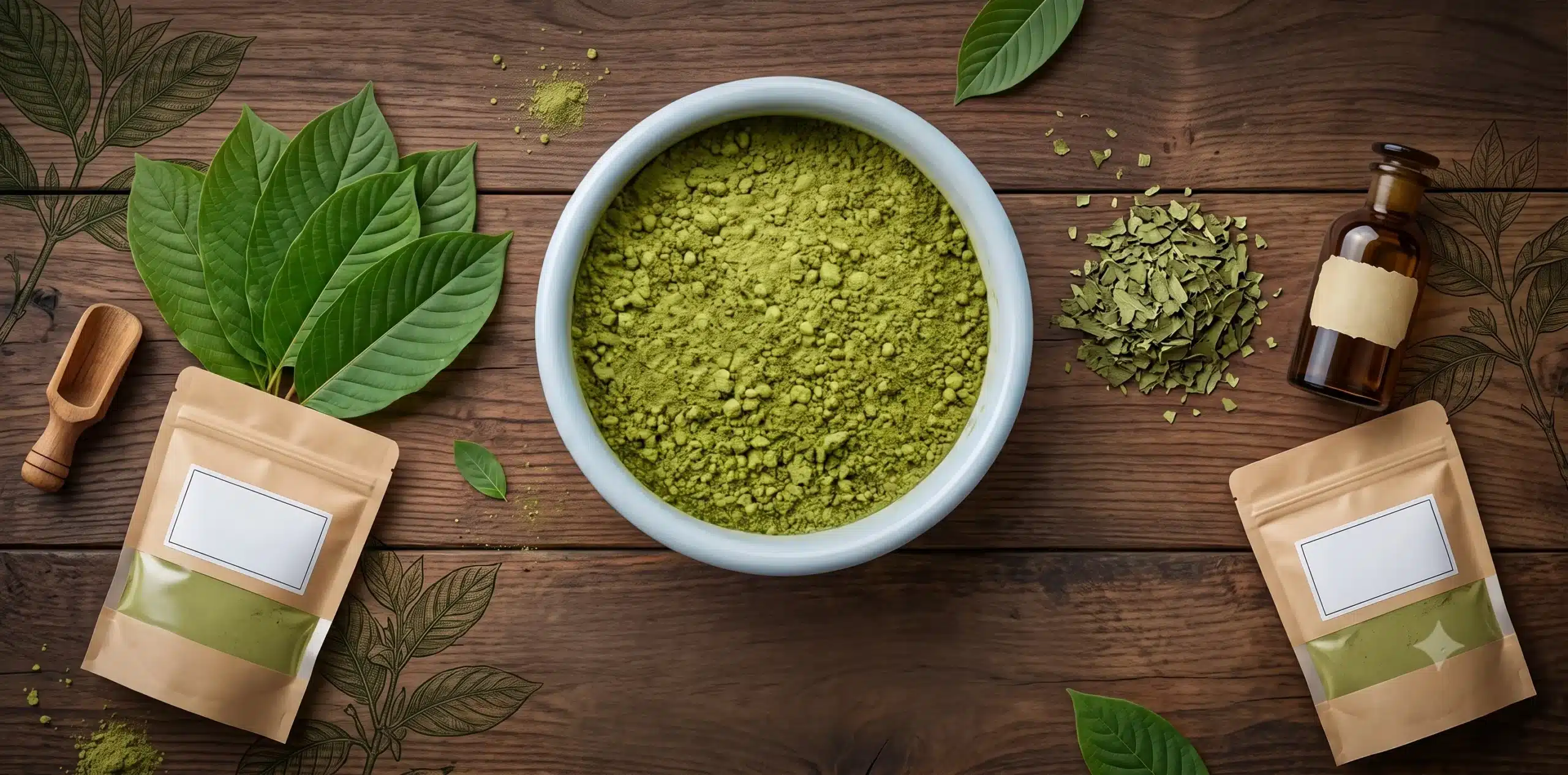
Among the many Indonesian Kratom varieties available today, Red Hulu Kratom has become popular for its regional identity rather than a proprietary name or marketing label. Originating from the Hulu region of West Kalimantan, this strain reflects the cultivation traditions and environmental conditions associated with one of Indonesia’s well-known Kratom-growing areas.
But what exactly sets it apart from other Red Kratom varieties? This guide explores the strain’s origin, production process, defining characteristics, and key distinctions, helping you understand what makes Red Hulu Kratom a recognized name in today’s Kratom market.
Red Hulu Kratom is a red strain of Mitragyna speciosa plant harvested from mature leaves along the banks of the Kapuas Hulu / upper Kapuas River area in the West Kalimantan region of Indonesia. It falls under the broader Hulu Kapuas family of strains, distinguished by its deep red leaf color and limited regional sourcing.
| 🌿 Where Does The Name “Hulu” Come From? “Hulu” is an Indonesian word meaning “upstream” or “upper river,” referring to the higher stretches of the Kapuas River where this strain is grown. |
The process behind Red Hulu Kratom says a lot about why it’s treated as a specialty strain. Let’s take a look at what goes behind the cultivation and harvesting process of Red Hulu Kratom:
The Kapuas River regularly deposits mineral-rich sediment across its upper banks, creating soil conditions that differ from other Kratom-growing regions in Borneo. Combined with dense forest cover and consistent humidity, this environment is one of the main reasons Red Hulu Kratom is treated as a distinct strain rather than a regional variation of Red Borneo.
📌 Inside the Alkaloid Profile of Red Hulu KratomRed Hulu Kratom naturally contains alkaloids such as Mitragynine and 7-Hydroxymitragynine. Their concentration isn’t fixed and can vary from one harvest to another based on factors such as leaf maturity, regional growing conditions, and post-harvest drying methods. |
Red Hulu Kratom is available in several product forms. Let’s take a look at how they differ:
👉 Note: You can buy Red Hulu Kratom powder from OKUSA in different size options. However, the capsule format is currently unavailable for this strain.
A handful of factors set Red Hulu Kratom apart from more commonly available strains in the Kratom market.
⭐Regional Exclusivity: Grown within a narrow stretch of the Kapuas Hulu region, unlike Red Borneo or Red Bali, which are farmed across broader areas.
⭐Leaf Composition: Mature leaves from this region carry a naturally dense alkaloid content, largely attributed to mineral-rich soil and consistent rainfall.
⭐Small-Batch Processing: Most Red Hulu Kratom is processed in smaller batches rather than large-scale commercial runs.
⭐Market Rarity: Limited farmer access and harvesting logistics keep supply low compared to mainstream Red strains.
While these Hulu varieties share the same regional origin, their classification is influenced by differences in harvest timing and post-harvest processing rather than by different plant species.
Let’s take a closer look at how they might differ from each other:
| Comparison Basis | Red Hulu | Green Hulu | White Hulu | Yellow Hulu |
| Leaf Maturity at Harvest | Fully mature / oldest leaves | Mid-lifecycle / moderately mature leaves | Early lifecycle / youngest leaves | Variable (typically Green or White base) |
| Primary Processing Method | Prolonged indoor drying followed by brief direct sun exposure | Standard indoor drying with no UV light exposure | Short indoor drying followed by immediate UV/sun exposure | Multi-day fermentation and oxidation before final milling |
| Final Powder Hue | Deep reddish-brown to dark green | Vibrant bright green | Light pale green | Light tan to yellowish-mustard |
| Market Availability | Rare / specialty | Moderate | Rare | Highly rare / custom blend |
Not all Red Kratom strains are developed the same way. Comparing their origins, production methods, and sourcing provides a clearer understanding of what sets each variety apart.
Here’s what set each one of them apart:
| Basis of Comparison | Red Hulu Kratom | Red Thai | Red Bali | Red Maeng Da | Red Dragon |
| Geographic Origin | Hulu (Kapuas) region, West Kalimantan, Indonesia | Originally associated with Thailand; now largely cultivated in Indonesia | Bali and Sumatra regions of Indonesia | Originally linked to Thailand; now widely cultivated in Indonesia | Commercial blend rather than a single geographic region |
| Production Style | Indoor drying followed by brief sun exposure | Traditional sun-drying methods | Combination of sun-drying and indoor drying | Made by carefully selected mature leaves using specialized processing | Prepared by blending different Red Kratom varieties |
| Alkaloid Composition | Consists of Mitragynine, 7-Hydroxymitragynine, and other secondary alkaloids | Contains a higher proportion of Mitragynine than many traditional Red varieties | Consists of 7-Hydroxymitragynine along with speciogynine | High overall alkaloid content due to selective cultivation | Alkaloid profile varies depending on the strains included in the blend |
| Market Availability & Sourcing | Less common; sourced from a specific growing region in West Kalimantan | Widely available through many vendors | One of the most widely available Red Kratom varieties | Commonly available and produced on a larger scale | Availability varies because it is a vendor-specific blend |
💡 Need more information on Red Kratom strains? Read these next:
Although Red Hulu Kratom has a well-documented regional origin, a few common misconceptions continue to circulate about the strain. Let’s get a clear picture on myths vs facts of Red Hulu Kratom:
❌ Myth: “Hulu” refers to a separate island.
✔️ Fact: Hulu refers to the upper stretch of the Kapuas River, not a distinct island within Borneo.
❌ Myth: Red Hulu leaves grow in a deep red color while still on the tree.
✔️ Fact: Mitragyna Speciosa leaves in the Hulu region are predominantly green while growing. The red coloring develops after harvest, through specific drying and oxidation steps applied during processing.
❌ Myth: Red Hulu and Red Hulu Kapuas are two different strains.
✔️ Fact: They generally refer to the same strain — “Kapuas” simply clarifies the river the region is named after.
As Red Hulu Kratom is said to be a rare strain, each detail deserves a closer look before buying.
Yes, they are the exact same strain. “Hulu Kapuas” is the full regional name, while “Red Hulu” and “Red Kapuas” are just shorthand variations.
“Standard” Red Kratom is a broad category covering Red strains grown across various Indonesian regions, such as Bali, Sumatra, and Borneo. Red Hulu Kratom is a specific regional variety within that category, tied exclusively to the Kapuas Hulu growing area, which sets its origin, processing, and market availability apart from more widely sourced Red strains.
It’s a regional strain — the name reflects its origin in the Hulu stretch of the Kapuas River in West Kalimantan, rather than being a brand-created label. This naming convention is common across the Kratom market, similar to how Red Bali and Red Thai are named after their regions.
Its legality depends entirely on local laws rather than the specific strain name. While federally legal in the United States, it is strictly banned or regulated in several countries, as well as specific US states, counties, and cities. Therefore, it is suggested that you check the Kratom summary of state laws before buying.
⚠️ Know more on: Is Kratom Legal?
When buying Red Hulu Kratom, choose a trusted vendor that provides transparent sourcing information, and clear product labeling. Since this is a regionally sourced strain, verifying its origin is just as important as evaluating product quality. At OKUSA, our Red Hulu Kratom Powder is sourced from trusted cultivation regions, is lab-tested, and packaged with quality and transparency in mind, so you can shop with greater confidence.
💡 Still have more questions on Kratom? Check out our FAQs page here!
Disclaimer: This article is for general product education only and does not replace professional or legal guidance. Product details, availability, lab reports, and shipping restrictions can change. Review current product labels, COAs, and local rules before placing an order.