
- Call: (725) 215-0109
- Email: support@organickratomusa.com
Rebranding launch sale: code FRESH20 for 20% off!
Free nationwide shipping over $79.00!
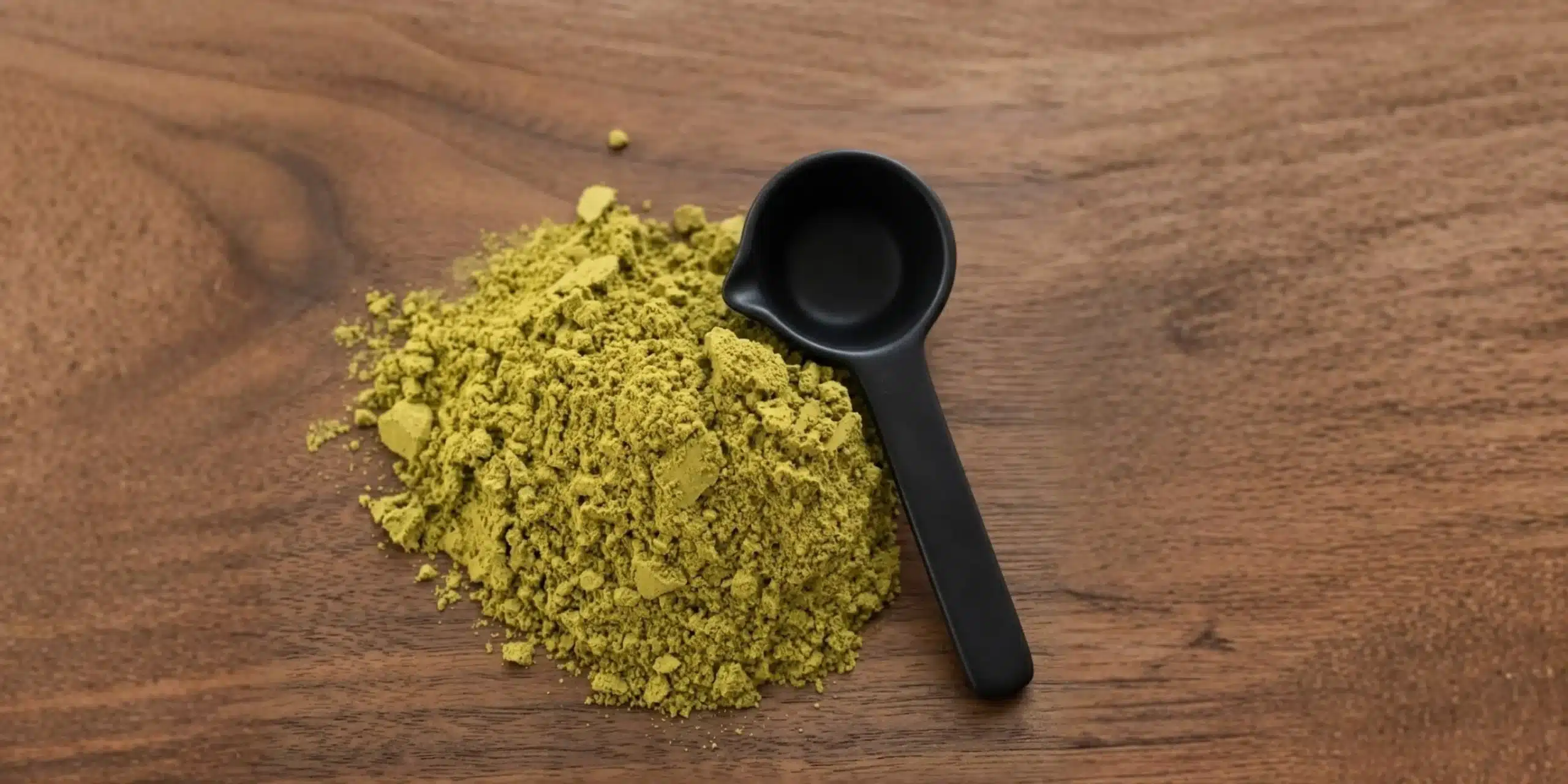
Let’s be honest — if you’ve been around the Kratom world for any length of time, you’ve probably noticed that the same handful of strains dominate every conversation. Maeng Da this, Bali that. And look, those are solid strains — but they’re everywhere.
Sunda Kratom is not everywhere. And that’s exactly what makes it worth talking about.
Whether you’re hearing about this strain for the first time or you’ve been chasing a reliable source for a while, this guide will cover everything — the origin, what sets it apart, the different color varieties, and why we at OKUSA are proud to carry it. Let’s get into it.
Sunda Kratom: Quick Definition
|
Sunda Kratom is a Mitragyna speciosa strain named after its place of origin — the Sunda Islands, a sprawling archipelago tucked into Southeast Asia. Like all Kratom strains, the name tells you the story: this one comes directly from a very specific, very unique corner of the world.
What makes it stand out isn’t just geography — it’s the combination of rich volcanic soil, old-growth trees, and a growing environment that very few regions on earth can replicate. The Sunda Islands sit at the crossroads of four countries: Indonesia, Malaysia, Brunei, and East Timor. That geographic convergence creates a biodiversity that directly shapes the quality of the Kratom grown there.
Here’s something most people don’t realize: the same island chain that produces Sunda Kratom is also responsible for Bali, Borneo, and Sumatra Kratom. So if you’ve had great experiences with any of those strains, you already have a sense of the region’s reputation.
The Sunda Islands aren’t just a pretty name on a label. They’re among the most ecologically rich places on the planet, home to mountain ranges, active volcanoes, and some of the world’s densest tropical rainforests.
The climate is hot and humid year-round, and that’s not incidental. For Sunda Kratom to develop its characteristic alkaloid profile, heat and humidity are essential. The equatorial sunlight plays an equally critical role. Intense, consistent sun exposure helps the Kratom leaves lock in nutrients and retain their potency all the way through harvest.
As the leaves mature on the tree, they go through a natural color change, and it’s that color shift in the veins that ultimately determines whether a leaf becomes a red, green, white, or yellow Kratom product.
The majority of Sunda Kratom that reaches the American market is sourced from the Indonesian-controlled islands in the archipelago. The population of the region is diverse, primarily Indonesian and Malaysian communities, with a long cultural history intertwined with Kratom cultivation.
This is a fair question, and the answer matters, especially if you’ve been searching for this strain and coming up empty.
Sunda Kratom is predominantly sourced from older, more mature Mitragyna trees. As commercial Kratom farming has expanded rapidly across Southeast Asia, many trees are harvested long before they reach full maturity. The old-growth trees that Sunda Kratom comes from are simply fewer in number, and that naturally caps the supply.
The rarity also creates a secondary problem: mislabeling. Because Sunda Kratom commands attention and is harder to source, some vendors will sell a more common strain under the Sunda name. That’s not just dishonest; it means the person buying it never actually gets what they’re looking for.
This is why sourcing and vendor accountability matter so much with this particular strain.
Like all Kratom strains, Sunda comes in multiple varieties — red, green, white, and yellow. Each one is distinct, shaped by when the leaf is harvested and how it’s processed after harvest. Here’s a breakdown of all four so you know exactly what you’re looking at.
Red leaves are the most mature at harvest; they’ve spent the longest time on the tree, soaking up sunlight and developing a deep, complex alkaloid profile. Red Sunda Kratom exhibits the hallmark characteristics of a well-developed red strain: rich and distinctly Sundanese in character.
Red Sunda has developed a loyal following among people who specifically seek out red Kratom from this region. If red Kratom is already your go-to, this one belongs on your radar.
Green Sunda Kratom is, by most accounts, the most popular variety in the Sunda family — and that reputation is well-earned. Green Kratom sits naturally in the middle of the spectrum. Green Sunda brings that balance, paired with the naturally occurring alkaloid concentration produced by the Sunda Islands’ growing conditions. It’s consistently one of the top-selling Sunda varieties wherever it’s available.
White Kratom is harvested earlier in the leaf’s life cycle, before the veins have had time to deepen. If you generally gravitate toward White-veined Kratom, White Sunda is a worthy addition to your rotation. It carries the same high-quality alkaloid foundation that the Sunda growing region is known for, just expressed differently across the Kratom spectrum.
Yellow Sunda Kratom is genuinely unlike the other three. The yellow color isn’t a vein color in the traditional sense; it develops through a specialized drying and curing process applied to the leaves after harvest. That process alters the alkaloid composition, producing a profile that’s distinct from standard red, green, or white Sunda.
Even vendors who carry the full Sunda lineup often struggle to keep yellow in stock. At OKUSA, Yellow Sunda Kratom Powder is what we specialize in, because we believe it represents the very best of what the Sunda Islands produce.
If you’ve been working through the classic Kratom strains and wondering whether Sunda is worth exploring, here’s the honest breakdown.
| Feature | Sunda Kratom | Bali Kratom | Maeng Da Kratom | Borneo Kratom |
| Origin | Sunda Islands, Indonesia | Bali, Indonesia | Thailand / Indonesia | Borneo Island, Indonesia |
| Tree Age at Harvest | Old-growth trees | Mixed | Selectively cultivated | Mixed |
| Alkaloid Profile | High Mitragynine, diverse alkaloid spectrum | Moderate, well-rounded | High Mitragynine | Moderate to high |
| Vein Color | Red, Green, White, Yellow | Red, Green, White | Red, Green, White | Red, Green, White |
| Yellow Variant? | ✅ Yes — specialized curing process | ❌ Rarely available | ❌ Not standard | ❌ Rarely available |
| Availability | Rare — limited supply | Widely available | Widely available | Widely available |
| Commercialization Level | Low — small batch, specialty | High | Very High | High |
| Geographic Uniqueness | Crossroads of 4 countries; unmatched biodiversity | Single island region | Single country origin | Single island region |
The takeaway? Bali and Maeng Da are everywhere for a reason; they’re reliable, consistent, and easy to source at scale. But Sunda Kratom offers something those strains simply can’t: a genuinely rare origin, old-growth sourcing, and a yellow variant that’s in a league of its own. If you’re looking for something beyond the usual rotation, the choice is pretty clear.
Finding Sunda Kratom isn’t always straightforward, especially when consistency can vary across sellers. This strain is less common than others, making it even more important to choose a source that prioritizes accuracy and proper handling.
If Sunda Kratom is on your radar, you may be tempted to grab it from a local smoke shop or convenience store — it’s quick, it’s easy, and it feels simple. But here’s the thing: for a strain this rare, where you buy matters just as much as what you buy.
Here’s how the two stack up side by side:
| Factor | Local Smoke Shop | OKUSA |
| Lab Testing | ❌ Rarely or never tested | ✅ Third-party tested every batch |
| AKA Compliance | ❌ Not typically verified | ✅ Fully AKA compliant |
| Strain Accuracy | ⚠️ High risk of mislabeling | ✅ Verified and accurately labeled |
| Freshness | ⚠️ Can sit on shelves for months | ✅ Fresh stock, vacuum-sealed packaging |
| Supply Chain Transparency | ❌ Unknown sourcing, multiple middlemen | ✅ Direct, transparent sourcing |
| Sunda Kratom Availability | ⚠️ Rare — often substituted | ✅ Genuine Yellow Sunda Kratom Powder in stock |
| Packaging | ❌ Often loose or repackaged | ✅ Vacuum-sealed for potency and freshness |
| Customer Accountability | ❌ No returns, no recourse | ✅ Transparent policies, reliable support |
Sunda Kratom stands out for those who look beyond the usual strain names and examine where their leaf comes from. Its origin is distinct, shaped by the natural conditions of the Sunda Islands, and its alkaloid profile reflects that difference. The yellow variety, in particular, remains less commonly discussed, even among experienced Kratom buyers, making it a noteworthy option for those who like to stay informed.
We carry Yellow Sunda Kratom Powder at OKUSA because we believe in what the Sunda Islands produce — and because we’ve done the work to source it properly, test it thoroughly, and deliver it to you in the condition it deserves to arrive in.
Sunda Kratom leaves are hand-harvested by experienced farmers across the Indonesian-controlled Sunda Islands. The timing of the harvest is critical; it determines the vein color and ultimately the alkaloid profile of the final product. After harvesting, the leaves undergo a drying and processing stage that varies by vein color.
The Sunda Islands sit at the intersection of four countries, creating a level of biodiversity that’s genuinely rare. The volcanic soil is rich in minerals, the tropical climate provides consistent heat and humidity, and the dense rainforest canopy creates growing conditions that simply can’t be replicated elsewhere. All of that feeds directly into the alkaloid concentration of the Kratom leaves grown there.
Sunda Kratom is predominantly sourced from older, mature Mitragyna trees — and as commercial Kratom farming has expanded rapidly across Southeast Asia, those old-growth trees have become fewer in number. The limited supply makes this strain genuinely rare and raises mislabeling as a real concern when buying from unverified sources.
No — while all three originate from the same general island region, they are distinct strains with different alkaloid profiles, growing conditions, and harvesting practices. Sunda Kratom comes specifically from old-growth trees across the Sunda Islands and carries a profile that sets it apart from both Bali and Borneo varieties.
Want to know all about Bali Kratom strains? Read our guide on “What Should I Know About Bali Kratom?”
Your best option is always a dedicated, AKA-compliant online Kratom vendor that conducts third-party lab testing and has full transparency over their sourcing chain. At OKUSA, we carry Yellow Sunda Kratom Powder that is lab-tested, vacuum-sealed, and sourced with full accountability — so you know exactly what you’re getting.
Disclaimer:
These statements have not been evaluated by the Food and Drug Administration. This product is not intended to diagnose, treat, cure, or prevent any disease. Must be 21 years of age or older to purchase. Not available in all states.