
- Call: (725) 215-0109
- Email: support@organickratomusa.com
Rebranding launch sale: code FRESH20 for 20% off!
Free nationwide shipping over $79.00!
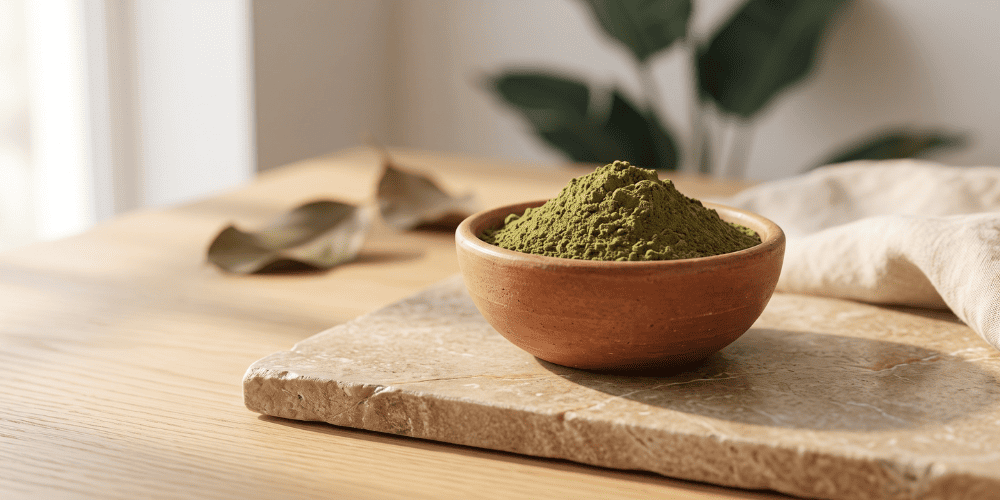
Red Horn Kratom is recognized for its distinctive horn-shaped leaf, which sets it apart from many other Kratom varieties. Its name comes from two defining characteristics—the red-colored veins found on mature leaves and the horn-like points that can appear along the edges of Mitragyna speciosa leaves.
This Red Horn Kratom guide explores the background of this unique strain, including its origin, processing methods, alkaloid profile, and how it compares with other Horn and red Kratom varieties. Together, these details provide a clearer picture of what defines Red Horn Kratom within the wider Kratom category.
Before exploring the strain in greater detail, here is a quick Red Horn Kratom review:
| Features | Details |
| Botanical Name | Mitragyna speciosa |
| Strain Name | Red Horn Kratom |
| Primary Cultivation Region | Borneo, Indonesia |
| Leaf Characteristic | Distinct jagged, horned edges |
| Vein Color | Red |
| Common Product Forms | Powder, Capsules, Extracts |
| Plant Type | Tropical evergreen tree |
Red Horn Kratom is a rare variety of the Mitragyna speciosa tree native to the jungles of Borneo, Indonesia. It falls under the broader Red Kratom category and gets its name from the pointed, horn-like tips that can form along certain Kratom leaves.
| Term | Meaning |
| 🔴 Red | Points to the color classification tied to the leaf’s vein and stem coloring at the point of harvest. |
| 🌿 Horn | Refers to the spiked leaf-tip formation that appears on select Kratom trees. |
The production of the Red Horn Kratom strain involves several stages. Here is a quick look at the process:
Farming methods can vary depending on the region and local practices.
After harvesting, Red Horn Kratom leaves go through several preparation stages before being processed into different product formats.
🌿 Common processing steps include:
The alkaloid profile of Red Horn Kratom refers to the naturally occurring compounds found within the leaves of the Mitragyna speciosa plant.
⚡ Primary Kratom Alkaloids:
⚡ Secondary Alkaloids:
Other alkaloids include:
The alkaloid composition of Red Horn Kratom can vary between harvests due to several natural cultivation and processing factors, including:
Red Horn Kratom typically comes in a few standard product formats, each with its own packaging style and preparation method:
The table below highlights the main distinctions within the Horn Kratom varieties:
| Basis | Red Horn Kratom | White Horn Kratom | Green Horn Kratom |
| Harvest Maturity | Gathered from fully mature leaves | Picked at an earlier leaf stage | Collected at a mid-mature stage |
| Drying Method | Sun-dried | Rapidly air-dried indoors | Dried with limited light exposure |
| Alkaloid Composition | High in 7-Hydroxymitragynine due to longer sun drying, with lower levels of mitragynine | High in mitragynine because early harvesting prevents the compounds from changing | A balanced blend of mitragynine and secondary alkaloids like speciogynine |
💡 Explore the other Horn Kratom varieties in greater detail:
Each Red Kratom variety has distinct identifying characteristics. The following comparison highlights what separates Red Horn from other widely recognized Red strains:
| Basis | Red Horn | Red Maeng Da | Red Bali | Red Borneo |
| Growing region | Borneo (Indonesia) | Thailand, Indonesia | Bali and wider Indonesian forests | Borneo, Indonesia |
| Leaf Shape | Jagged, spiked margins | Pointed, structured oval | Large, broad oval | Flat, rounded oval |
| Market Availability | Limited seasonal yields due to manual leaf-by-leaf selection methods | Mass-cultivated and mostly available year-round | Easily available in most Kratom stores, both offline and online | Moderate availability as compared to other Red strains in the market |
💡 Know about each Red strain in detail. Read these next:
Red Horn Kratom may not be available as widely as some other Kratom varieties because of its specific classification and regional sourcing.
👉 If you are looking for Red Horn Kratom products, OKUSA offers Red Horn Kratom in powder format. Here are a few reasons to consider OKUSA when exploring Red Horn Kratom:
| ✔️ Third-party lab-tested Kratom products ✔️ Transparent product details and sourcing information ✔️ Multiple Kratom strains and product formats ✔️ Clear order tracking options ✔️ Responsive customer support |
📜 Read our Red strain guides to compare further:
Red Horn Kratom is less common than standard Red Kratom strains because the horn-shaped leaf trait only appears under specific growing conditions in Borneo. This limited leaf trait, rather than any special processing, is what keeps supply tighter than other Red varieties.
Red Horn Kratom powder generally follows the same storage approach as other Kratom powders — a sealed, dry container kept away from direct light and moisture. No additional storage steps are tied specifically to its horn-leaf trait.
💡 Learn — The Best Way To Store Kratom
Red Horn Kratom legality depends on the state or region where it is being purchased. In many areas, Kratom products are available under state regulations, while some locations have restrictions or specific rules. Before purchasing, check the current Kratom laws in your location to confirm availability.
The horn-shaped tips form due to regional growing conditions rather than any added processing step. Certain Kratom trees in specific parts of Borneo naturally develop this pointed leaf edge as part of their growth pattern.
Yes, Red Horn Kratom is typically priced higher than standard red strains because the horned leaves are rare and require a labor-intensive, hand-picked harvesting process. This limited seasonal supply and specialized sorting create a higher market price for different batches.
👉 Still have more questions? Check out our FAQ page here before you shop!
Disclaimer: This article is provided for general educational information. Kratom laws and product requirements differ by jurisdiction and may change over time. Review current federal, state, and local rules before purchasing. Product specifications, stock, sourcing details, and laboratory results may differ by batch.